Enamel.

Treatment 01

Porcelain veneers

Thin bonded ceramic facings that change the shape, edge and shade of the front teeth as one set.

6–10 weeks from records to fitPer tooth: $1,450 — $2,100
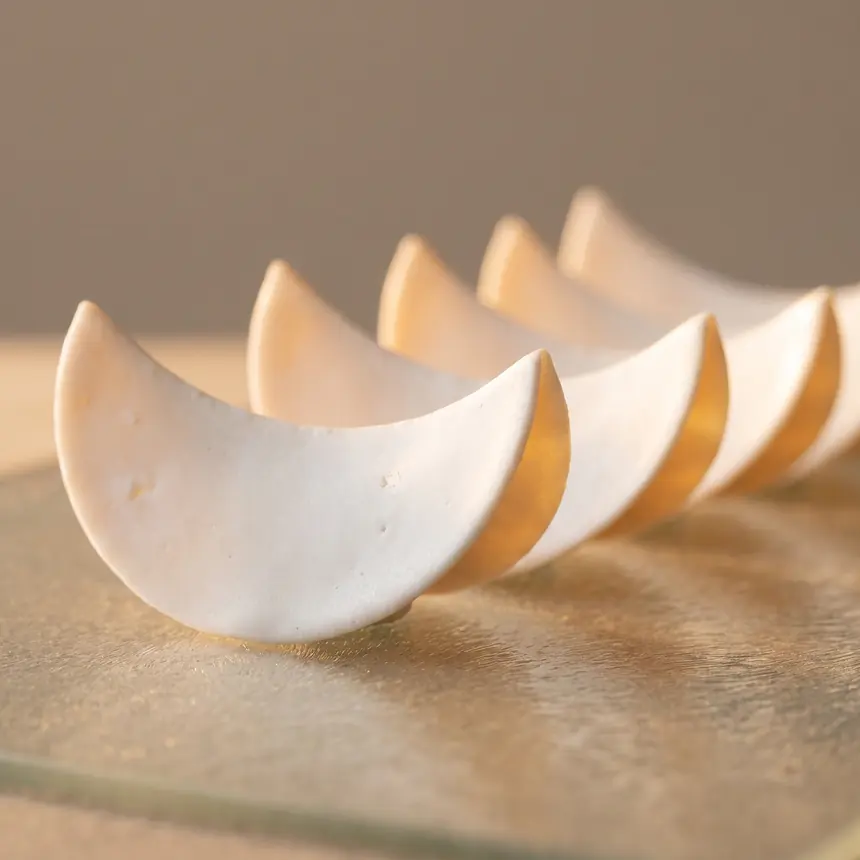
Paper-thin translucent porcelain veneer shells backlit on a glass slab

What it actually is

A veneer is a facing of dental ceramic, usually between 0.3 and 0.7 mm thick, bonded to the front of a tooth. Because ceramic is translucent and takes a polish that plaque struggles to hold, a well-made veneer sits in the mouth very differently to a composite build-up. The trade is that most veneer preparations remove some enamel, and enamel does not grow back. We treat that as the central decision, not a detail.

The sequence

5 stages, in this order, for this reason.

  1. 01

    Records and design

    Photographs, a digital scan and a bite record. We design the proposed shape digitally and mill or print a physical mock-up so you can see it before anything is prepared.

    Visit one · about 75 minutes
  2. 02

    Trial smile

    The mock-up is trialled directly on your unprepared teeth in temporary material. You wear it, photograph it, show it to somebody whose opinion you trust, and come back with changes. Nothing is irreversible at this stage.

    Visit two · about 45 minutes
  3. 03

    Preparation and temporaries

    Enamel is reduced conservatively, guided by the approved design rather than removed to a fixed depth. A scan is taken and provisional veneers are placed. Sensitivity to cold is common while temporaries are on.

    Visit three · 2–4 hours
  4. 04

    Fit and bond

    The ceramic is tried in with water and then with try-in paste so shade can be assessed before it is committed. Bonding is done under isolation, one or two teeth at a time. The bite is refined at the end.

    Visit four · 2–3 hours, 2–3 weeks later
  5. 05

    Review

    A short appointment two weeks later to check the gum margins, the bite under function and the polish. Most people need one small adjustment.

    Visit five · 20 minutes

Who it suits

  • Front teeth that are worn, chipped or uneven in a way whitening cannot address
  • Intrinsic discolouration that has not responded to whitening — tetracycline banding, fluorosis
  • Small gaps and mild rotations where the bite is otherwise stable
  • People who have already completed any orthodontic movement they need

When we would say no

  • Active gum disease or untreated decay — those are treated first, always
  • Heavy unmanaged grinding, unless a night guard and a bite assessment come first
  • Significant crowding, where moving the teeth first means removing far less enamel
  • Anyone who wants a change we cannot demonstrate in a trial smile beforehand

Instead of this

The alternatives, including the cheaper ones.

A cosmetic practice that never names the less profitable option is not giving you a choice.

Composite bonding

Sculpted directly in one visit, reversible, roughly a third of the cost. It stains sooner and chips more readily, and it typically needs polishing every year or two and replacement inside five to seven. For a single chipped edge it is often the better answer.

Whitening alone

If shade is the only complaint and the shapes are good, whitening is cheaper, non-invasive and removes no enamel. We will say so.

Clear aligners first

Straightening before veneering usually means preparing four teeth instead of eight, and preparing them less. It adds months and it is very often worth it.

Before you agree

What can go wrong, and what we cannot promise.

This is the part most sites leave out. It is also the part that a consent discussion is legally and ethically built on.

  • Preparation removes enamel on most teeth and cannot be reversed. The tooth will need a veneer or a crown from then on.
  • Sensitivity to cold for a few weeks after preparation is common and usually settles.
  • Ceramic can chip or debond, most often in people who grind. A night guard is part of the treatment, not an upsell.
  • Gum margins mature for several months; the final photograph is not the two-week photograph.
  • We cannot promise a specific service life. Published follow-up studies commonly report the majority of bonded ceramic veneers still in service at ten years, with failures rising after that.

Fee

$1,450 — $2,100

Per tooth. Includes design, trial smile, temporaries, the ceramic and two reviews. A night guard is quoted separately at $525.

Indicative. Your written plan is itemised and is produced only after an examination. Members take 15% off restorative fees. We are out of network; you receive a coded receipt for out-of-network reimbursement.

Book a consultHow payment works

A word on language. You will not read the word “painless” on this site, and you will not read that any restoration is permanent. Local anaesthetic makes most treatment comfortable at the time; some procedures are sore afterwards and we will tell you which and for how long. Restorations are maintainable, not eternal. Anyone promising otherwise is selling rather than consenting.

Questions

About porcelain veneers

They commit them. Conservative preparation stays within enamel wherever the design allows, and some cases can be done with no preparation at all. But once enamel is removed the tooth needs a bonded restoration from then on, and that is the honest cost of the treatment. We show you the planned reduction on the mock-up before you agree to anything.

However many show when you smile fully — usually six, eight or ten. Treating four when eight show produces a visible shade step at the corners of the mouth. We take a full smile photograph at the consultation and count from that, not from a formula.

That is a design decision rather than a material one. We build translucency, surface texture and a slightly irregular edge into the design deliberately, and you approve it in the mouth as a trial smile before any preparation.

A small edge chip can sometimes be polished or repaired in composite. A significant fracture means remaking that unit, which takes two visits. We keep your design file so a replacement matches.

Ninety minutes, and you leave with a written plan.

$190, credited against treatment. Scottsdale, on Kierland Boulevard.

Book a consult(480) 555-0142